Roof repair places homeowners near power lines, steep surfaces, sharp fasteners, and concealed hazards. These five safety checks help explain why extensive roof work is best left to trained professionals.
1. Scout power lines
Locate overhead power lines before raising a metal ladder. Work near live electrical lines can cause severe injury or death and should be left to professionals.
2. Use appropriate footwear
Loose granules, algae, debris, and roof pitch can all reduce traction. Soft-soled, secure footwear helps, but it does not remove the need for fall protection.
3. Use a roofing safety harness
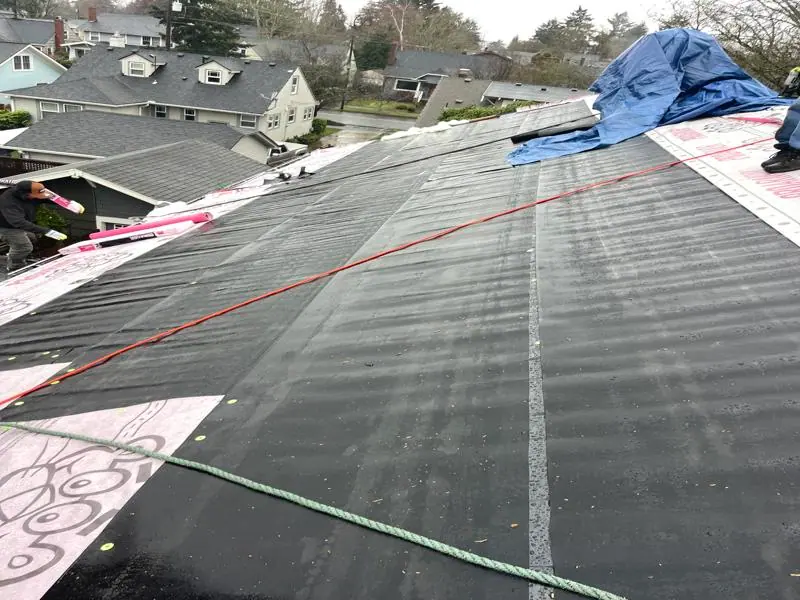
A properly installed roof anchor, harness, rope, and connector work together to reduce the consequences of a fall. Each component must be correctly rated and attached.
4. Watch for stinging insects
Soffits and vents can conceal nests. Startling a wasp colony while on a roof can cause a dangerous instinctive movement or loss of balance.
5. Wear eye protection
Nails, screws, metal shards, wood splinters, shingle granules, sawdust, and mold spores can all injure the eyes and trigger a dangerous misstep.
For extensive repairs, steep roofs, leaks, or uncertain roof conditions, call a professional roofer rather than working beyond your training or safety equipment.